
The Lowell Mills: America’s First Industrial City
The Lowell mills, located in the city of Lowell, Massachusetts, were the most famous example of the American textile industry and the model for a distinctive American approach to industrialization. Founded in the 1820s by a group of Boston merchants led by Francis Cabot Lowell, the Lowell mills were the first large-scale integrated cotton manufacturing operation in the United States, and they became the basis of America’s first planned industrial city.
The Founding of Lowell
The city of Lowell was founded in the 1820s as a planned industrial city. The site had been a small farming village on the Merrimack River in northern Massachusetts, but the Boston merchants who organized the new enterprise, known as the Boston Associates, saw the potential of the river’s water power for driving textile machinery. They bought the land, built the mills, and constructed a new city to house the workers.
The first mill in Lowell, the Merrimack Manufacturing Company, began operation in 1823. It was followed by the Hamilton Manufacturing Company in 1825, the Appleton Company in 1828, and several others. By 1836, there were more than 30 mills in Lowell, employing more than 10,000 workers, and the city had become the largest industrial center in the United States.
The growth of Lowell was closely tied to the development of the power loom. The first power loom in the United States had been built by Francis Cabot Lowell in Waltham, Massachusetts, in 1814, and the Boston Associates had used the power loom to create the first fully integrated cotton manufacturing operation in the world. The article on Francis Cabot Lowell and the Lowell system describes Lowell’s role in this development in more detail.
The Lowell System of Labor
The Lowell system was a distinctive approach to industrial labor that combined the efficiency of the factory system with the moral and intellectual improvement of the workers. The system was based on the employment of young women from the surrounding New England farms, who came to Lowell to work in the mills for a few years before returning to their families to marry.
The “Lowell girls,” as the women workers were called, were recruited by the mill companies through a network of agents who traveled the New England countryside. The women were typically between 15 and 30 years old, and they were attracted to Lowell by the opportunity to earn money, to live independently, and to take part in the cultural and intellectual life of the city.
The women workers were housed in company-owned boarding houses, with strict rules of behavior. They were required to attend church, to abstain from alcohol, and to observe a curfew. The companies supported a wide range of cultural and educational activities, including lectures, concerts, and a circulating library. The Lowell Offering, a literary magazine published by the women workers, was one of the first publications of its kind in the United States.
The Lowell system treated workers as members of a moral and intellectual community, with company boarding houses, churches, lectures, and the Lowell Offering magazine as concrete expressions of that vision. The vision was influenced by the Unitarian and transcendentalist ideas of the New England elite, and it was an attempt to create a more humane form of industrial development than the British system, which was notorious for its use of child labor and its harsh conditions.
The Decline of the Lowell System
The Lowell system began to decline in the 1840s and 1850s, as the conditions of work in the mills deteriorated and the women workers began to organize. The first major strike in the American textile industry, the Lowell girls’ strike of 1836, was a protest against a wage cut, and similar protests occurred in the following years. The women workers were eventually replaced by Irish immigrants and, later, by workers from French Canada and other sources, who were willing to work for lower wages.
The conditions of work in the Lowell mills also deteriorated as the mill companies cut costs to maintain their competitiveness. The working day was lengthened, the pace of work was increased, and the fines for infractions were raised. The women workers responded with a series of strikes and protests, but they were eventually defeated by the mill companies, which replaced them with cheaper labor.
Despite its decline, the Lowell system had important effects on American industry and on American society. The system established the factory system in the United States, with its concentration of workers, machines, and power in a single building. It developed a skilled and disciplined industrial workforce, many of whom went on to become leaders in other industries. And it created a model of industrial development that was widely imitated, both in the United States and in other countries.
The Lowell Mills and the Industrial City
The Lowell mills were the basis of a new kind of industrial city. The city of Lowell was planned from the beginning, with the mills at the center and the workers’ housing arranged around them. The city grew rapidly, from a few hundred inhabitants in the 1820s to more than 30,000 by 1850, and it became one of the largest cities in the United States.
The Lowell mills were among the largest industrial operations in the world in the 1830s and 1840s, and they were visited by observers from around the world, including the French political economist Michel Chevalier, who wrote a famous account of his visit. The Lowell mills were seen as a model of industrial development, and they helped to establish the United States as a major industrial power.
The Lowell mills also had important effects on the surrounding region. The demand for labor in the mills drew workers from the New England countryside, and the population of northern Massachusetts grew rapidly. The mills also created a market for agricultural products, and the New England farmers benefited from the demand for food from the growing industrial population.
The Legacy of the Lowell Mills
The Lowell mills established the factory system in the United States and trained the first generation of American industrial workers. The mills also produced a distinctive American approach to industrial labor, with its emphasis on the moral and intellectual improvement of the workers, that has had a lasting influence on American social policy.
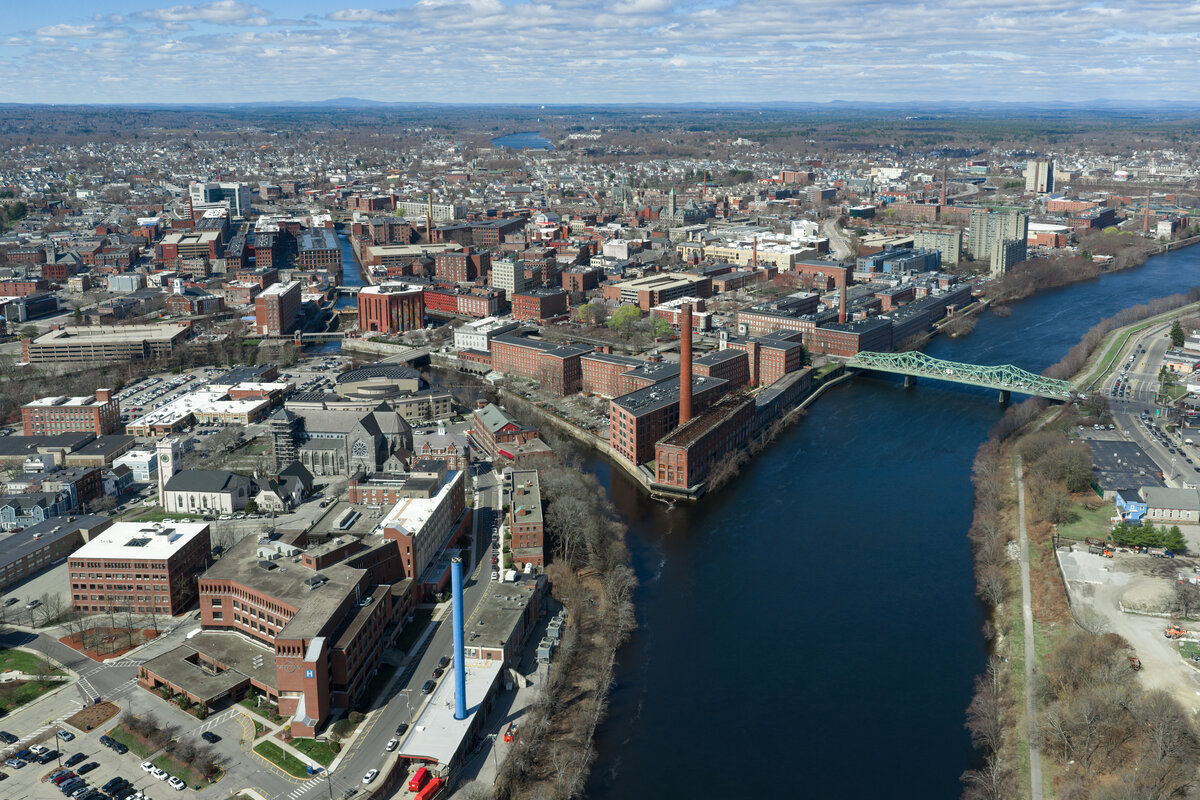
The Lowell mills are also remembered as the basis of a distinctive American city. The city of Lowell, with its network of canals, its rows of brick mill buildings, and its neighborhoods of workers’ housing, is a unique urban landscape that preserves the history of American industrialization. The Lowell National Historical Park, established in 1978, preserves many of the original mill buildings and the workers’ housing, and it is a major destination for visitors interested in the history of the Industrial Revolution.
The mills remain visible in the canals, brick walls, and worker housing of Lowell, and the Lowell National Historical Park preserves them as a working exhibit of the country’s earliest industrial city.
The Continuing Question
The unresolved question about the Lowell mills is the same one that has been raised in the lowell-girls and women-in-textile-mills articles: were the early-19th-century Lowell mills a viable alternative to the post-1840s Lowell model that actually developed? The traditional answer, going back to the 1840s’ Lowell Offering and given its modern form in the work of Thomas Dublin’s Women at Work (1979), is that the early Lowell model was a real improvement on the alternative: the wages were high, the working conditions were supervised, and the cultural institutions (the Lyceum, the periodical, the boarding-house regime) gave the mill girls an unusual degree of public voice. The revisionist answer, developed in the work of feminist historian and given a more pointed form in the recent literature on Irish-immigrant labor, is that the early Lowell system was an exception that depended on a particular labor-market condition (the absence of cheap immigrant labor), and that the moment the Irish famine immigrants arrived in the 1840s, the system was reorganized around the new cheap labor. The interesting current question, raised in the work of economic historian Claudia Goldin and developed in the recent comparative literature on paternalistic factory systems, is whether the Lowell model was a viable long-term alternative to the Irish-immigrant model that actually developed, or whether it was always going to be undercut by the next wave of cheap labor. The honest answer, given the comparative data, is probably: the Lowell model was a viable experiment in a closed labor market, but not in an open one, and the long-term history of the global textile industry has been the history of successive experiments in paternalistic factory communities being undercut by the next wave of cheap labor. The 1820s Lowell system, in other words, was a special case whose lessons about corporate-community partnership have been difficult to apply in the more open labor markets of the 20th and 21st centuries.
See also
- Francis Cabot Lowell and the Lowell system
- American textile industry
- overview of the American Industrial Revolution
- overview of the Industrial Revolution
Selected Sources
- Alfred D. Chandler Jr., The Visible Hand: The Managerial Revolution in American Business (1977).
- David F. Noble, America by Design: Science, Technology, and the Rise of Corporate Capitalism (1977).
- Walter Licht, Industrializing America: The Nineteenth Century (1995).
- Alexis McCrossen, Land of Necessity: Consumer Culture in the United States–Mexico Borderlands (2009).