
The Cotton Gin: An American Invention That Reshaped the World
The cotton gin, invented by Eli Whitney in 1793, was one of the most consequential inventions of the Industrial Revolution. The simple device, which separated the seeds from the fibers of short-staple cotton, transformed the American South into the world’s largest producer of cotton, fueled the British cotton industry, and helped to entrench the system of plantation slavery. No other single device of the period did more to link the Lancashire factory to the Mississippi plantation.
The Problem of Cotton Cleaning
Cotton, the soft white fiber that grows around the seeds of the cotton plant, has been used for cloth production for thousands of years. There are two main types of cotton: long-staple cotton, which has long, silky fibers that can be easily separated from the seeds by hand, and short-staple cotton, which has shorter, coarser fibers that are tightly attached to the seeds.
Long-staple cotton, which was grown in small quantities in the coastal areas of the American South, the Caribbean, and parts of the Mediterranean, was profitable but could not be produced in large quantities. Short-staple cotton, which would grow well in the interior of the American South, was much more difficult to process. Separating the fibers from the seeds by hand was a slow and laborious process, requiring a worker a full day to clean a single pound of cotton. As a result, the cultivation of short-staple cotton was not profitable, and the interior South remained economically backward compared to the tidewater regions.
Whitney’s Invention
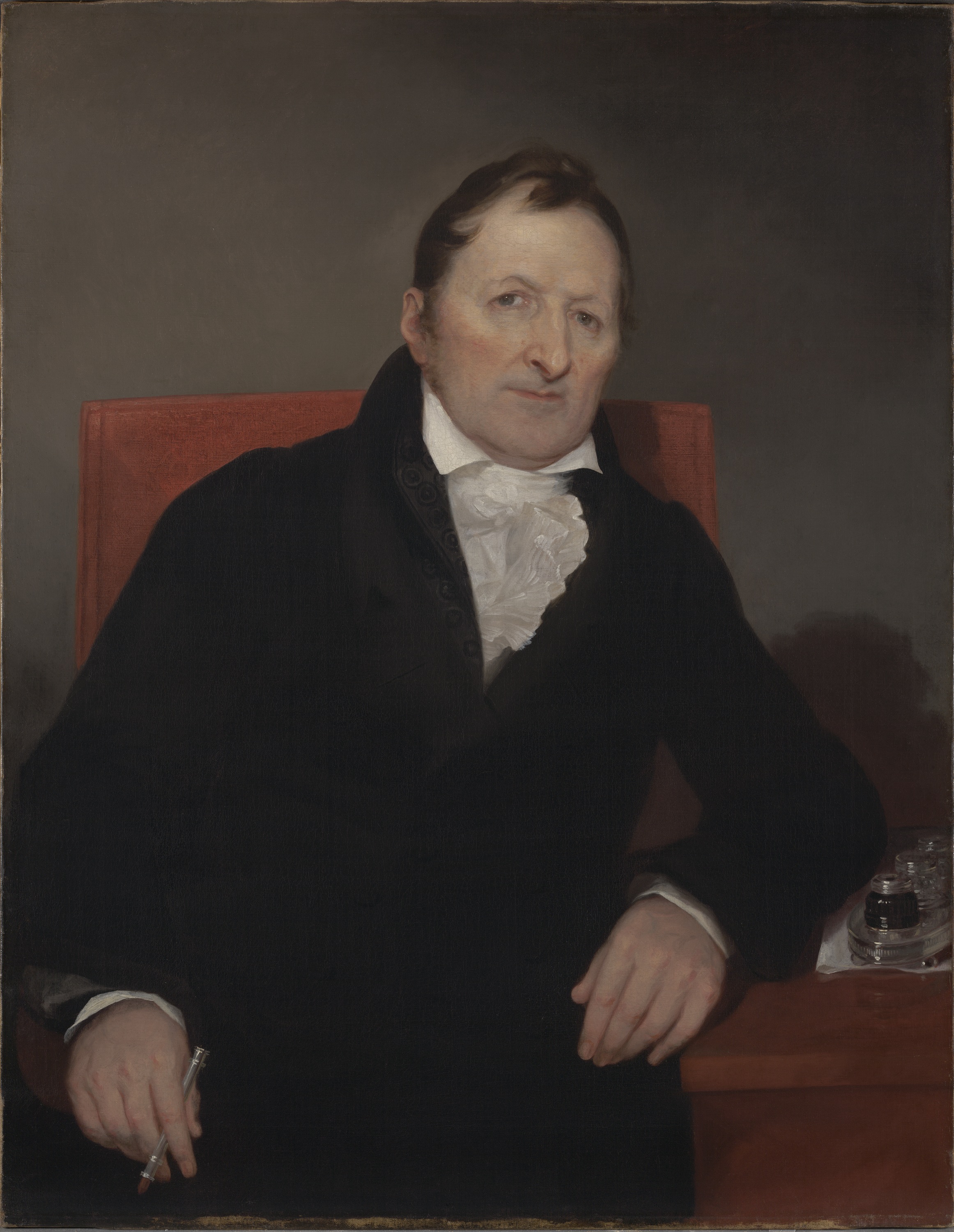
Eli Whitney, a Yale-trained tutor and craftsman from Massachusetts, traveled to Georgia in 1793 to take up a position as a private tutor. While there, he met Catherine Greene, the widow of the Revolutionary War general Nathanael Greene, and he learned of the difficulty of processing short-staple cotton. With Greene’s encouragement, he began to work on a machine to solve the problem.
The result, after several months of experimentation, was the cotton gin, a device that used a combination of hooks, screens, and brushes to pull the cotton fibers through a screen while leaving the seeds behind. The first version of the gin, which Whitney built in 1793, was hand-cranked, but later versions were powered by animals, by water, or by steam.
The cotton gin was an immediate success. A single worker using a gin could clean as much cotton in a day as fifty or more workers using hand methods, and the cost of cleaning cotton fell by roughly an order of magnitude. The standard figure, drawn from the work of Miriam Rokisky and David Wright, is that ginning was about fifty times faster than hand-cleaning — a productivity gain that made the mass cultivation of upland short-staple cotton, the variety that grew in the interior South, suddenly profitable.
The Rise of the Cotton Kingdom
Within a few years of the invention of the gin, the production of short-staple cotton in the American South had soared. U.S. cotton output rose from about 73,000 bales in 1800 to roughly 250,000 bales by 1820, to around 730,000 bales by 1830, and to nearly 5 million bales by 1860 — on the eve of the American Civil War the United States was supplying about 75 percent of the world’s raw cotton. The opening of new lands in the Mississippi Delta and Texas, the removal of the indigenous peoples, and the extension of slave plantations all accompanied the mechanical breakthrough.
The rise of the Cotton Kingdom transformed the American South. Wealthy planters expanded their plantations into the interior of the region, displacing small farmers and forcing enslaved people to clear new land and plant cotton. Cities like New Orleans, Mobile, and Charleston grew rapidly as centers of the cotton trade, and a network of roads, canals, and later railroads developed to bring the cotton to market. The South became the world’s leading exporter of a single commodity, and its economy, society, and politics were organized around the production of cotton.
The Cotton Gin and the British Industry
The availability of cheap raw cotton from the American South was a powerful stimulus to the British cotton industry, which was already the largest single industry in the world. The combination of mechanized spinning, the power loom, and the steam engine had made it possible to produce cotton cloth in vast quantities, and the raw material for this cloth came increasingly from the American South.
By 1840, the United States was supplying the majority of the raw cotton used in British mills, and the British cotton industry was the largest single consumer of American exports. The interdependence of the British and American economies, with Britain buying cotton and selling manufactured goods, was one of the defining features of the nineteenth-century world economy.
The dependence of British industry on American cotton was a constant source of anxiety for British policymakers. The Lancashire cotton famine caused by the American Civil War, when Union blockades and the collapse of the Southern economy cut off the supply of raw cotton, threw hundreds of thousands of British textile workers out of work and created a major political crisis in Britain. The article on the cotton gin in the First Industrial Revolution context describes this dependency in more detail.
The Cotton Gin and Slavery
The cotton gin had a profound effect on the institution of slavery in the American South. By making cotton enormously profitable, the gin increased the demand for enslaved labor to plant, tend, and pick the crop. The internal slave trade in the United States expanded rapidly in the early nineteenth century, and the population of enslaved people in the cotton-growing states grew from about 700,000 in 1790 to over 3 million in 1860.
The link between the cotton gin and slavery is one of the most troubling aspects of the history of the Industrial Revolution. Although Whitney himself was not an advocate of slavery, his invention contributed to the entrenchment of one of the most brutal labor systems in modern history. The Civil War, fought in part over the future of slavery, was in some sense an indirect consequence of the cotton gin’s impact on the Southern economy.
Whitney’s Later Career
Whitney applied for a patent on the cotton gin in 1794, and the patent (U.S. patent 72X) was granted on 14 March 1794. By 1807, when Congress extended the patent for a further five years by special act, the design had been widely copied and Whitney had filed numerous suits for infringement in the southern states. Whitney spent much of his later life trying to enforce his patent and recoup his losses. He had only limited success, and the cotton gin did not make him wealthy.
Whitney’s later career, however, was not without distinction. In 1798, he won a contract from the U.S. government to produce 10,000 muskets, and in fulfilling this contract he pioneered the use of interchangeable parts in manufacturing, a development that laid the groundwork for the American system of manufactures and eventually for the mass production techniques of the twentieth century. The article on Eli Whitney and his inventions describes Whitney’s career in more detail.
The Global Consequences
The cotton gin’s effects extended well beyond Britain and the United States. The demand for raw cotton stimulated the growth of cotton production in India, Egypt, and West Africa, and shaped the patterns of European colonialism in the nineteenth century. The British occupation of Egypt in 1882 was widely understood in the cabinet of William Gladstone to be, among other things, about the security of the Egyptian cotton supply. In India, the deindustrialisation of the handloom sector — the subject of recent revisionist work by Tirthankar Roy (How Britain Underdeveloped India, 2019; The Economic History of India, 1857–1947, 2012) and others — was driven by a combination of British tariff policy, the procurement policies of the East India Company, and the rising scale of Lancashire, not by the cotton gin alone. The simple device that Whitney built in 1793 nevertheless sits at the head of a chain of consequences that reshaped the economies, societies, and politics of three continents.
The Continuing Question
The interesting current question about the cotton gin is whether Eli Whitney actually invented it. The patent of 1807 (filed 1794) and the popular account in the 19th-century school readers have Whitney working out the saw-gin in a Georgia boarding house in 1793. Angela Lakwete’s Inventing the Cotton Gin (2003) used the patent records and the correspondence of the Whitney family to argue that the device was a community invention — that Catherine Greene suggested the idea, that a mechanic named John Small built the first working model, and that Whitney’s contribution was the patent litigation that secured the legal claim. The implications matter for how the history of technology is told, and they matter for the larger question of whether the 50-fold productivity gain in cotton ginning (from 1 pound a day to 50 pounds a day) should be credited to a single inventor, to a community, or to a wider set of agricultural conditions (the high cotton prices of the 1790s, the post-1791 opening of the Sea Island coast to settlement, the steady depletion of the long-staple supply from the older Tidewater region) that made the invention valuable. The interesting current question, raised in the work of economic historian Alan Olmstead and the agricultural economist Paul Rhode, is whether Whitney’s gin was as productive as the textbooks say, or whether the working gins of 1800-1810 (the 80-spiked-cylinder designs, the horse-powered gins, the first steam gins) were a series of community refinements on Whitney’s original. The same question — credit the inventor, or credit the community? — recurs in the Bessemer process, the Newcomen engine, and the spinning jenny, and the cotton gin is the cleanest case where the question has been reopened by modern scholarship.
Selected Sources
- Cynthia Crossen, The Skilled Laborer: The Life and Times of Eli Whitney (Lancelot, 1964)
- Angela Lakwete, Inventing the Cotton Gin: Machine and Myth in Antebellum America (Johns Hopkins University Press, 2003)
- Sven Beckert, Empire of Cotton: A Global History (Vintage, 2014)
- Tirthankar Roy, How Britain Underdeveloped India (Verso, 2019)
For more on the related technology, see cotton manufacturing and the spinning jenny.