
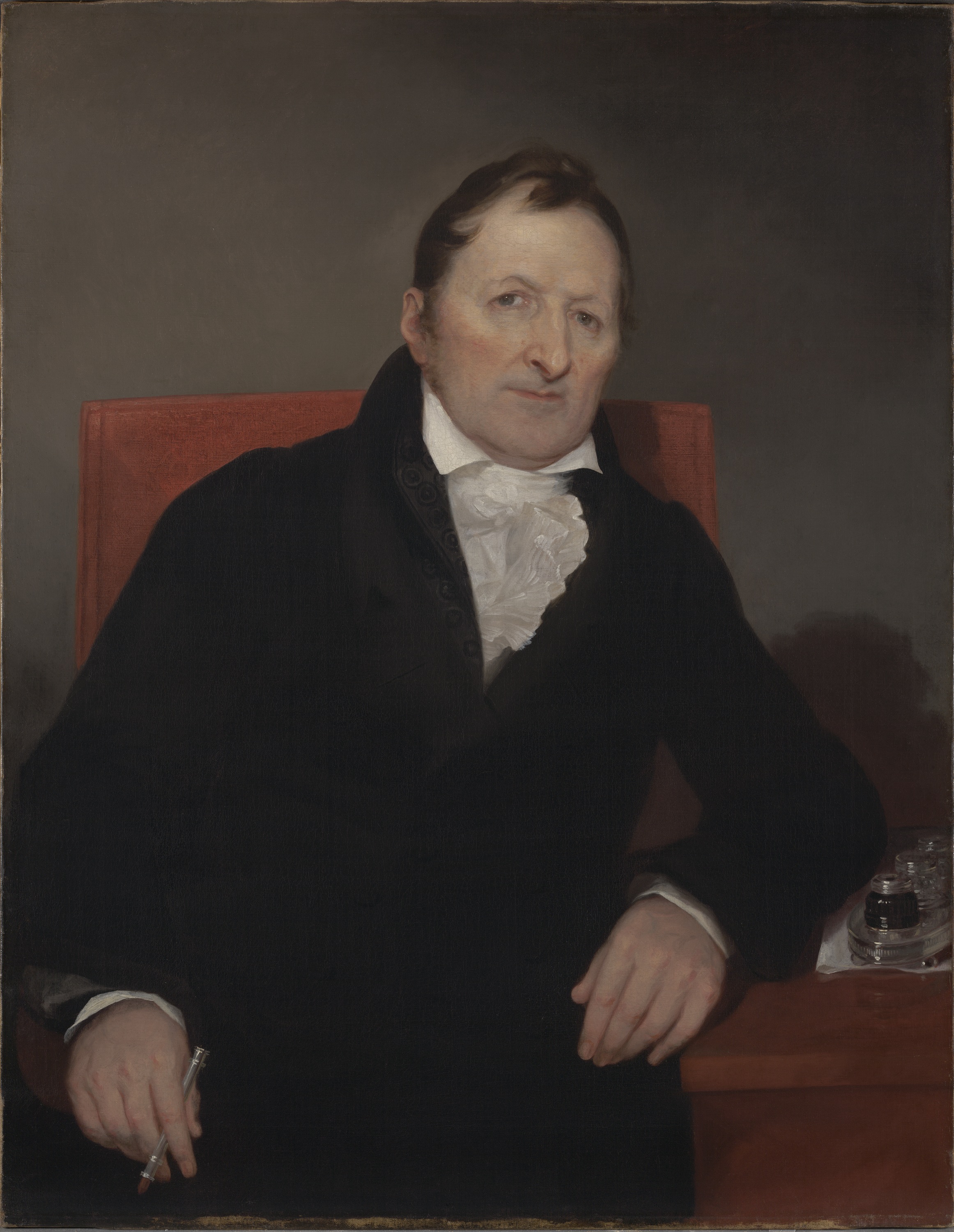
Eli Whitney: Inventor of the Cotton Gin and Pioneer of Interchangeable Parts
Eli Whitney (1765-1825) was an American inventor best known for two transformative contributions: the invention of the cotton gin in 1793, which helped make the American South the dominant producer of cotton in the world, and the pioneering of interchangeable parts in manufacturing, which laid the groundwork for the American system of manufactures and ultimately for the mass production techniques of the twentieth century. Whitney’s career illustrates the way in which a single inventor, working in a particular moment, can shape the development of a whole economy.
Early Life and Education
Whitney was born in Westborough, Massachusetts, in 1765, the son of a farmer. As a young man, he worked on the family farm and learned to be a skilled craftsman, eventually finding work as a maker of nails, hat pins, and ladies’ hatpins. With the financial help of his father, he enrolled at Yale College, graduating in 1792. After a brief stint as a schoolteacher, he accepted a position as a private tutor in Georgia, intending to earn enough money to continue his education in law.
The job in Georgia, however, was the beginning of a very different career. While waiting for his pupils to arrive, Whitney began to experiment with various mechanical devices, and he soon met Catherine Greene, the widow of the Revolutionary War general Nathanael Greene. Greene told Whitney of the difficulties faced by Southern planters in processing short-staple cotton, and she encouraged him to work on a machine to solve the problem.
The Cotton Gin
The result, after several months of experimentation, was the cotton gin, a simple device that used a combination of hooks, screens, and brushes to pull cotton fibers through a screen while leaving the seeds behind. The first cotton gin, which Whitney built in 1793, was hand-cranked, but later versions were powered by horses, oxen, water, or steam.
The cotton gin was an immediate success. It allowed a single worker to clean as much cotton in a day as fifty or more workers using hand methods, and the cost of cleaning cotton fell by a factor of almost 100. Within a few years, the production of short-staple cotton in the American South had soared, and the United States had become the world’s largest supplier of raw cotton, fueling the British cotton industry and transforming the American South into the heart of a global commodity economy.
Whitney applied for a patent on the cotton gin in 1794, but the patent was not granted until 1807, and it was largely ignored by Southern planters, who built their own versions of the gin without paying royalties. Whitney spent much of his later life trying to enforce his patent and recoup his losses, with limited success.
The Cotton Gin and Slavery
The cotton gin had profound consequences for the institution of slavery in the American South. By making cotton enormously profitable, the gin increased the demand for enslaved labor to plant, tend, and pick the crop. The number of enslaved people in the cotton-growing states grew rapidly in the early nineteenth century, and the system of plantation slavery became more deeply entrenched.
The link between the cotton gin and slavery is one of the most troubling aspects of Whitney’s legacy. Although Whitney himself was not an advocate of slavery, his invention contributed to the entrenchment of one of the most brutal labor systems in modern history, and to the buildup of economic and political tensions that eventually led to the American Civil War.
Interchangeable Parts
Whitney’s second great contribution came in 1798, when he won a contract from the U.S. government to produce 10,000 muskets for the army. At the time, each musket was individually crafted by a skilled gunsmith, with parts that were often slightly different from one another. The muskets were slow and expensive to produce, and parts from one musket could not be used in another.
Whitney proposed a radical alternative: to make the parts of the musket so similar to one another that any part could be used in any musket. To achieve this, he developed a system of jigs, fixtures, and gauges that allowed semi-skilled workers to produce parts to precise, uniform specifications. The system, which became known as the American system of manufactures, was a major step toward mass production.
The first batch of muskets was delivered late and over budget, and Whitney’s role in pioneering interchangeable parts has been debated by historians. What is clear is that the U.S. armories at Springfield and Harpers Ferry, which Whitney’s work influenced, became the leading centers of the new manufacturing techniques in the early nineteenth century. By the mid-nineteenth century, the principles of interchangeable parts had spread to the production of clocks, sewing machines, agricultural machinery, and eventually automobiles.
Whitney’s Place in American Industrialization
Whitney’s career illustrates several important features of the American Industrial Revolution. The United States had a chronic shortage of skilled labor, which made the development of labor-saving machinery and standardized production methods particularly valuable. The American system of manufactures, with its emphasis on interchangeable parts and mass production, was a distinctive American response to these conditions.
Whitney’s career also shows the way in which a single inventor, working in the right circumstances, could have an outsized effect. Whitney was not a great scientist or a great industrialist, but he was a skilled mechanic with a practical problem to solve, and his solutions to those problems transformed two industries. The cotton gin transformed the American South, and the American system of manufactures transformed American industry.
The Continuing Question
The unresolved historical question about Whitney is whether he actually invented what he is famous for inventing. The 19th-century American schoolbook picture credits him with the cotton gin (1793) and the interchangeable-parts musket (1798). The modern scholarship, developed in Robert Woodbury’s The Legend of Eli Whitney and Interchangeable Parts (1960) and in Angela Lakwete’s Inventing the Cotton Gin (2003), is more skeptical. Woodbury showed that Whitney’s 1798 Springfield contract did not actually deliver interchangeable parts in the modern sense — the parts were similar but not truly interchangeable, and the first true interchangeability at Springfield dates to the 1840s-1850s, not to Whitney’s contract. Lakwete showed that the saw-gin of 1793 was the work of a community of Georgia mechanics, and that Whitney’s contribution was the patent litigation rather than the device. The interesting current question, raised in the work of economic historian Alan Olmstead and the agricultural economist Paul Rhode, is whether Whitney’s reputation reflects a 19th-century “great inventor” mythology constructed by the school readers and the patent lawyers, or whether it reflects a real if less monolithic contribution. The cotton gin and the Springfield armory are the two cleanest cases, and in both cases the modern answer is closer to the community story than to the heroic-individual story. The 19th-century heroic-individual story has had a longer half-life in the United States than in Britain, partly because of the strength of the 19th-century American self-made-man tradition, and partly because the United States was the only industrial country to develop a 20th-century mass-production culture (Ford, the assembly line) that needed the heroic-inventor myth more than the British or the German industrial cultures did.
See also
- cotton gin
- American textile industry
- American Industrial Revolution
- overview of the Industrial Revolution
Selected Sources
- Sven Beckert, Empire of Cotton (2014).
- Gene Dattel, Cotton and Race in the Making of America (2009).
- D.A. Farnie, The English Cotton Industry and the World Market 1815–1896 (1979).
- T.S. Ashton, The Industrial Revolution (1760–1830) (1948).