
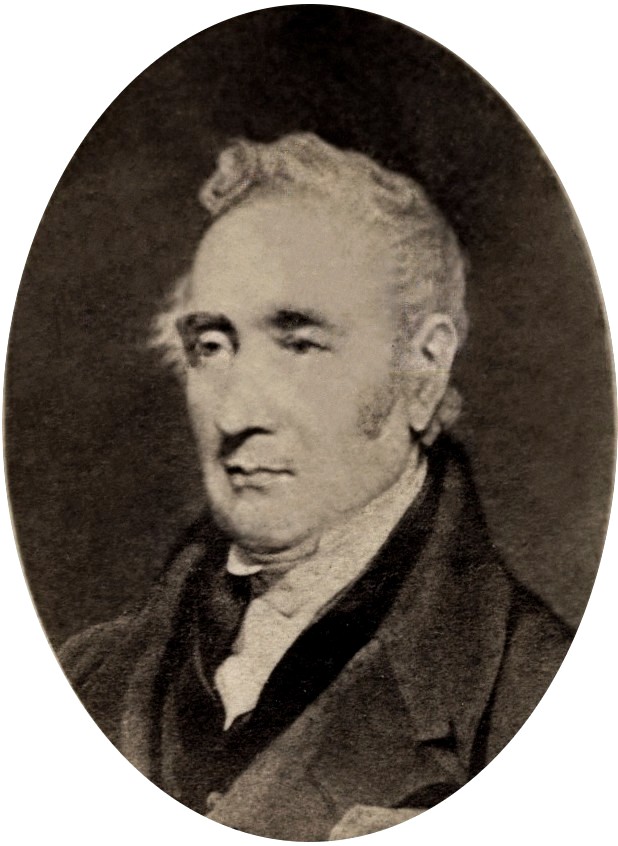
George Stephenson: The Father of Railways
George Stephenson (1781-1848) was the English civil and mechanical engineer known as the “Father of Railways” for his pioneering work in locomotive design and railway engineering. The son of a coal miner from Wylam in the northeast of England, Stephenson had no formal education, but through a combination of natural talent, relentless curiosity, and decades of practical experience, he became one of the most influential engineers of the nineteenth century. His most famous achievement, the Rocket locomotive, won the Rainhill Trials in 1829 and helped establish the basic form of the steam locomotive for the next century.
Early Life and Mining Work
Stephenson was born in 1781 in a small cottage at Wylam, near Newcastle upon Tyne, in a region dominated by coal mining. His father worked as a fireman in a colliery, and George himself began working in the mines at the age of eight, first as a coal trapper and later as a fireman. From these humble beginnings, Stephenson taught himself to read and write as a young adult, and he began to study the machinery of the mines, including the Newcomen and Watt steam engines used to pump water and wind coal.
Stephenson’s mechanical talent was soon noticed, and he was promoted to the position of engineman, responsible for the maintenance of the colliery engines. In his spare time, he began to experiment with steam locomotives, and in 1815 he patented a safety lamp for use in the explosive atmospheres of coal mines, similar to but developed independently of the lamp invented at the same time by Humphry Davy. The lamp helped establish Stephenson’s reputation and gave him the financial security to pursue larger projects.
Early Locomotives
In 1814, Stephenson built his first locomotive, called Blücher, for the Killingworth Colliery railway. The locomotive demonstrated the feasibility of using steam to pull coal wagons along iron rails, but it was not yet a practical or efficient machine. Over the next decade, Stephenson continued to improve his designs, building locomotives that were progressively lighter, more powerful, and more reliable.
Stephenson’s big break came in 1821, when he was appointed chief engineer of the Stockton and Darlington Railway, a public railway designed to carry coal from the mines of County Durham to the port of Stockton-on-Tees. The railway opened in 1825 and was the first public railway in the world to use steam locomotives for haulage. Although the railway also used horse-drawn and gravity-powered traffic, the success of the steam locomotives encouraged the promoters of other railways to follow suit.
The Liverpool and Manchester Railway
Stephenson’s most important project was the Liverpool and Manchester Railway, opened in 1830. The railway was the first in the world to use steam exclusively for haulage, and it set the pattern for the railway age that followed. Stephenson served as the chief engineer, and his son Robert designed the locomotives.
The most famous of these was the Rocket, which won the Rainhill Trials in October 1829, a public competition organized to decide which locomotive design would be used on the new railway. The Rocket’s main innovations included a multi-tubular boiler, which provided a much greater heating surface than the earlier designs, and a blast pipe that improved the draft through the firebox. These features, together with the inclined cylinders that drove the wheels directly, made the Rocket the fastest and most efficient locomotive of its time, and they became standard features of steam locomotive design for the next century.
The Railway Engineer
The success of the Liverpool and Manchester Railway transformed George Stephenson’s career. He became the most sought-after railway engineer in Britain, and over the next two decades he worked on a wide range of railway projects, including the North Midland Railway, the York and North Midland Railway, and many others. He was also called as an expert witness in parliamentary hearings on railway bills, and his testimony helped shape the legislation that governed the construction of the new railways.
Stephenson’s approach to railway engineering was characterized by careful attention to gradients, curves, and the quality of the roadbed, as well as to the design of the locomotives. He believed that a railway should be engineered as a complete system, with the locomotives, the track, the signaling, and the operating procedures all designed to work together. This systems approach became a model for railway engineering worldwide.
Stephenson’s Legacy
George Stephenson died in 1848, having lived to see the railway he had helped to build transform Britain and the world. The opening of the Liverpool and Manchester Railway in 1830 is often taken as the symbolic beginning of the railway age, and within a generation railways had spread across Britain, Europe, North America, and beyond. The Rocket itself continued to run for several decades and is now preserved in the Science Museum in London.
By making it possible to move goods, people, and information quickly and cheaply over long distances, the railway helped to create a single integrated economy out of what had been a collection of regional markets.
Stephenson is also important for what his career represents. The self-taught son of a coal miner who became the most famous engineer in the world was a powerful symbol of the new social mobility of the industrial age. The same industrial system that created the new wealth also created new opportunities for talented individuals to rise above the circumstances of their birth, and Stephenson’s career is one of the clearest examples of this process.
What It Teaches Us
The unresolved question about Stephenson is whether he really was the “Father of Railways.” The traditional answer, going back to Samuel Smiles’s Lives of the Engineers (1862) and given its modern form in the Stephenson biographies of L. T. C. Rolt and of Jack Simmons, makes George Stephenson the heroic single inventor of the railway: the Rocket wins the Rainhill Trials of 1829, the Liverpool and Manchester opens on 15 September 1830, and the rest of the world follows. The revisionist answer, developed in Anthony Burton’s The Locomotive Pioneers (1975) and given a forceful modern statement in the work of railway historian William James, is that Stephenson was a competent engineer whose main claim to fame was being on the winning side of several patent disputes, and that the true pioneers of the railway were Trevithick, Hedley, Blenkinsop, and others who were working on steam locomotion in the 1800s and 1810s. The interesting current question, raised in the comparative history of transport technologies, is whether Stephenson’s career tells us anything about the way industrial innovations actually happen. The 19th-century answer, the heroic-single-inventor story, fits the patent-records and the school readers. The modern answer, the cumulative-community story, fits the engineering record. The unresolved question is which one is true.
See also
See also
- steam locomotive
- railroad revolution
- transcontinental railroad
- overview of the Industrial Revolution
Selected Sources
- L.T.C. Rolt, George and Robert Stephenson (1960).
- Jack Simmons, The Railway in England and Wales 1830–1914 (1978).
- D.S.L. Cardwell, The Steam Engine: A Scientific Anthology (1971).
- John F. Stover, The Routledge Historical Atlas of the American Railroads (1999).